How Long Does It Take to Get Over Someone?

Somewhere around week three, most people start doing the math. It has been this many days. Surely I should feel better by now. Why do I still reach for my phone when something funny happens?
You have probably seen the formulas online: half the length of the relationship, or a month for every year you were together. They are tidy, and they are not based on much. The honest answer is that there is no fixed number. But that doesn't mean the question is useless. There are real things that make getting over someone faster or slower, and some of them are in your hands.
What makes it take longer
How much of your life you shared. A three-month relationship and a five-year one are different losses, but the length on its own matters less than how woven together your lives were. Did you live together? Share friends, a dog, a gym, a Sunday routine? Every shared thing is something you have to rebuild alone, and each one takes a little time.
How it ended. A slow, mutual drifting apart often hurts less in the long run than a sudden ending, even if the sudden one was "cleaner". When a breakup comes out of nowhere, your mind spends weeks trying to make sense of it. Being cheated on, ghosted, or left without an explanation adds a layer of questions on top of the loss itself.
Whether the door is still a little open. This is the big one. If you still text now and then, check their stories, or hear updates through friends, the clock barely moves. Hope is a powerful thing, and it keeps the attachment alive. People are often surprised how much faster things go once they commit to real no contact.
What else is going on. A breakup during a stressful job change, a move, or a family crisis is harder. So is one that lands when you are already lonely. That's not a weakness. You are just carrying more at once.
What helps it go faster
You can't skip grief, but you can stop accidentally prolonging it.
- Cut the small contacts. Unfollowing or muting feels dramatic at first and normal a week later.
- Let yourself feel it on purpose. Ten minutes of crying with a sad playlist is better than a whole day of pretending you are fine and snapping at people.
- Fill the empty routines. Notice the specific times you miss them most (Sunday mornings, the drive home, the last hour before sleep) and put something new there, even something small.
- Remember the whole story. The brain loves a highlight reel after a loss. Writing down what was hard keeps you honest. Our post on red flags you see after a breakup might help.
- Stay connected to people. Not to "get back out there", just to remember that your life has other people in it.
Signs you are further along than you think
Healing rarely announces itself. It shows up in small, almost boring ways:
- You went a whole morning without thinking about them, and only noticed at lunch.
- Something good happened and your first instinct was to tell a friend, not them.
- You heard their name and it stung for a second instead of ruining your evening.
- You remember an argument as clearly as you remember a nice date.
- You are making plans for next month that have nothing to do with them.
If even one of those sounds familiar, you are moving, even on days when it doesn't feel like it.
Why "should I be over it by now?" is the wrong question
Comparing yourself to a deadline mostly adds shame to sadness. A better question is: compared to a month ago, how am I doing? If the answer is "a little better", you are on track. Healing is uneven. Good weeks get interrupted by bad days, often around anniversaries, holidays, or the first time you see them post something new.
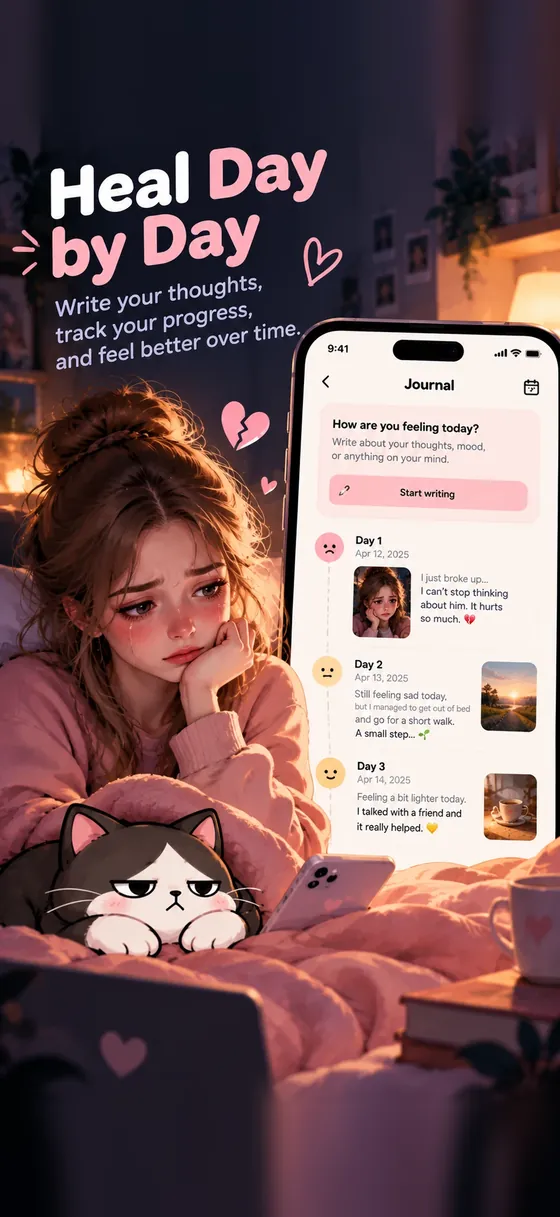
One practical trick: keep a tiny log. A line a day about how you felt, or just a number from one to ten. On a bad day, scroll back. You will usually find that today's "worst ever" is actually better than most days from the first two weeks.
When it's taking longer than it should
If months have passed and you are still struggling to sleep, eat, work or see friends, or if the sadness feels heavier over time rather than lighter, it is worth talking to a doctor or a therapist. Sometimes a breakup wakes up older grief or depression, and that deserves proper support. And if you ever have thoughts of hurting yourself, please reach out to a local crisis line or emergency number right away.
There is no deadline for getting over someone. There is only today, and whether it is a little lighter than the same day last month.
Frequently asked questions
How long does it take to get over someone?
There is no set number. It depends on how intertwined your lives were, how it ended, whether you are still in contact, and what else is happening in your life. Many people notice real change within a few months, especially once they stop all contact.
Is there a formula for getting over a breakup?
Formulas like "half the length of the relationship" are easy to remember but not reliable. A better measure is whether this month feels a little lighter than last month.
What if I'm still not over them after months?
If sadness is getting heavier rather than lighter, or you struggle to sleep, eat or work, talk to a doctor or therapist. If you have thoughts of harming yourself, contact a local crisis line or emergency number.
OverYou is a free iPhone app for keeping no contact: a streak, a 60-second timer for when the urge hits, and a place to write the text instead of sending it. See how it works.