Can't Sleep After a Breakup? Why Nights Are the Hardest

During the day you can almost manage. There's work, people, errands, noise. Then you lie down, the lights go off, and it all arrives at once: the last conversation, the things you should have said, the picture of them doing something without you. It's 2 a.m. and you're wide awake, scrolling back through old messages you swore you would stop reading.
If that sounds like your nights right now, you're in very common company. Trouble sleeping is one of the most frequent things people describe after a breakup, and there are good reasons it happens.
Why nights are worse
Nothing is competing for your attention. During the day, your mind has jobs to do. At night, it is just you and your thoughts, and an unresolved loss is very good at filling silence.
Night was often "your" time. The goodnight texts, the calls before bed, falling asleep next to someone. The hour before sleep is full of routines that used to include them, so it's where the gap feels widest.
Tired brains are bad at perspective. When you're exhausted, problems feel bigger and more permanent than they do in daylight. A thought like "I'll never feel normal again" seems completely reasonable at 3 a.m. and a bit dramatic at 11 the next morning.
Stress keeps the body switched on. A breakup is a real stressor. Racing heart, tight chest, the feeling of being wired and exhausted at once: that is your body on alert, and it makes falling asleep hard.
A plan for the hard hours
Big sleep advice ("get eight hours", "no screens ever") tends to fall apart when you're heartbroken. These are smaller and easier to actually do.
Before bed
- Charge your phone across the room. This single change removes most late-night checking and almost all late-night texting. If you use it as an alarm, a cheap alarm clock is worth it for a few weeks.
- Do a "brain dump". Spend five minutes writing down everything in your head: what you're angry about, what you miss, what you need to do tomorrow. It doesn't need to be neat. Getting it on paper tells your mind it doesn't have to hold on to it all night.
- Pick a boring wind-down. A shower, the same calm show, a familiar book. Avoid anything that reminds you of them, including "your" songs.
- Go easy on alcohol. A drink can make you sleepy, but it tends to make sleep lighter and wake you up in the early hours. It also has a famous effect on texting decisions.
When you can't fall asleep
- Breathe slower than feels natural. Try breathing in for four counts and out for six, for a few minutes. Long exhales help calm the body down.
- Give the thoughts a time slot. When a thought about them shows up, tell yourself: "I'll think about that tomorrow at 6 p.m." It sounds silly, and it works surprisingly often.
- Get up if it's been a long time. If you've been lying awake for what feels like twenty minutes or more, get up, sit somewhere dim, and do something quiet until you feel sleepy. Lying in bed fighting it tends to make the bed feel like a battlefield.
If the urge to text hits at night
Nights are when most regrettable messages get sent. Make a rule now, while you're calm: no messages to your ex between 10 p.m. and 8 a.m. If you want to write something, write it somewhere else and decide in the morning. You can read more in how to stop texting your ex.
During the day
Good nights partly start in the daytime. Getting outside in daylight in the morning, moving your body a bit, and keeping caffeine to the first half of the day all make it easier to fall asleep later. None of these fixes heartbreak, but they give your sleep a fighting chance.
Try not to make up for bad nights with long naps or very late mornings. A short nap is fine; a three-hour one will probably cost you the next night.
Be patient with yourself
Sleep usually comes back gradually as the shock of the breakup fades. The first week or two can be rough, then nights start getting a bit easier, often before the days do.
If weeks go by and you're still barely sleeping, or you feel hopeless, please talk to a doctor. Ongoing insomnia is very treatable, and you don't have to just push through it. If you're ever having thoughts of harming yourself, contact a local crisis line or emergency number straight away.
The 3 a.m. version of your life is not the real one. Get through the night; the morning will see things more clearly.
Frequently asked questions
Why can't I sleep after a breakup?
A breakup is a real stressor that keeps your body on alert, and nights are quiet, so unresolved thoughts get louder. Bedtime also tends to be full of routines you used to share.
What helps you fall asleep after a breakup?
Keep your phone out of reach, write down what's on your mind before bed, breathe out slower than you breathe in, and if you've been awake for a long time, get up and do something quiet until you feel sleepy.
How long does breakup insomnia last?
For most people sleep improves gradually as the shock fades, often within a few weeks. If you're still barely sleeping after several weeks, talk to a doctor; insomnia is very treatable.
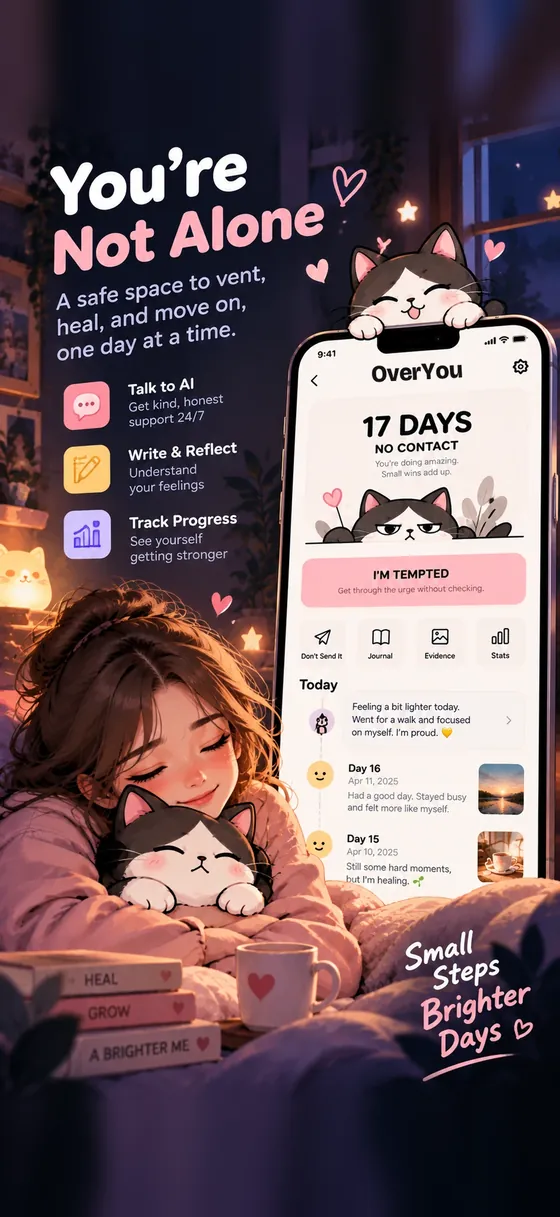
OverYou is a free iPhone app for keeping no contact: a streak, a 60-second timer for when the urge hits, and a place to write the text instead of sending it. See how it works.