First Heartbreak: Why It Hurts So Much and How You'll Get Through It
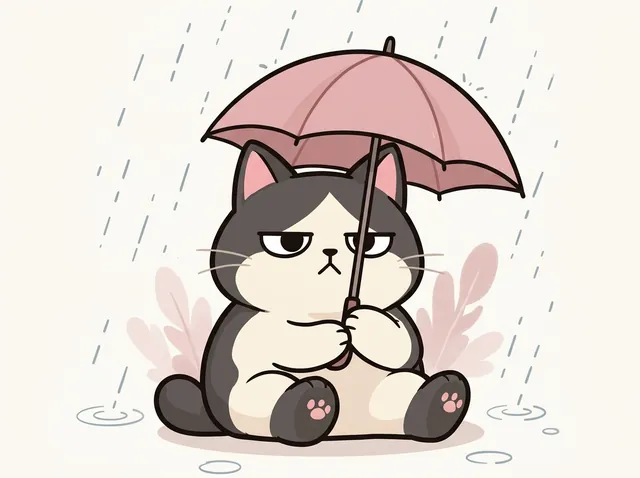
If this is your first heartbreak, you might be lying in bed reading this with your phone close to your face, wondering why nobody warned you it would feel like this. Your chest aches. You keep rereading old messages. And maybe a small voice says you're overreacting, because "it was only a few months" or "everyone goes through this".
You're not overreacting. A first breakup can hurt more than almost anything you've been through so far, and there are real reasons for that. It does get lighter. Here is why it hurts so much, and what helps in the first days and weeks.
The short answer
Your first heartbreak hurts so much because it's your first. You've never lost someone this way before, so you have no proof yet that you can survive it, and your brain treats it as a real loss, which it is. What helps: tell someone you trust, take a break from contact and from their profile, look after your body, and give it time. The pain usually comes in waves, and the waves slowly get smaller.
Why does my first heartbreak hurt this much?
A few things are happening at once.
It's a real kind of pain. In one brain-imaging study, people who had recently been through a breakup they didn't want looked at a photo of their ex. Areas of the brain linked to the physical sensation of pain became active. So when people say heartbreak "hurts", they're not just using a figure of speech. If your body feels it too, with a tight chest, no appetite or a sick stomach, see what a breakup can do to your body.
You have nothing to compare it to. Adults who have been through a few breakups carry a quiet memory: "I felt like this before, and it passed." You don't have that memory yet. So the pain can feel permanent, even though it isn't.
They were part of every day. The good-morning text, the person you sat with, the songs, the plans for the weekend. When it ends, every one of those habits points at an empty space. For a longer look at the science, here's why breakups hurt the way they do.
Missing them doesn't mean you made a mistake. It means it mattered.
Is it normal to feel this bad over a first relationship?
Yes. You're in very big company. Researchers who looked at more than 4,000 counseling sessions with young people aged 10 to 18, who had contacted a national youth helpline about a relationship worry, found that breakups were the most common reason they got in touch. That was true for boys and girls, and for younger and older teens alike.
Another study of 910 teenagers found that nearly a quarter had been through a breakup. When the researchers asked why those relationships ended, most of the reasons came down to the relationship not giving people what they needed, especially closeness. Not to someone being unlovable.
So if you feel like the only person who has ever cried this hard over someone, you're not. Lots of people around you have felt exactly this. Most of them just didn't say it out loud.
Will I ever stop feeling like this?
Honestly, yes, though it rarely happens in a straight line. In a study of young adults who had just been through a breakup, people filled in a short emotions diary several times a day for four weeks. Their feelings swung up and down the most right after the breakup. Over the following weeks, sadness and love for the ex gradually went down. One thing slowed that down: staying in contact with the ex.
So expect good hours and bad hours. A song in a shop can knock you flat on a day you felt fine. That isn't going backwards. It's what healing looks like up close. If you want to know what the next weeks might look like, the stages of a breakup may help you recognize where you are.

Who should I talk to?
Someone. That's the most important step, and it's the one people skip because they feel embarrassed. You don't need to explain everything. "We broke up and I'm really sad" is enough.
- A parent or carer, if you can. Many of them remember their own first heartbreak more clearly than you'd think.
- A school counselor, teacher or coach you trust. Helping students through breakups is a normal part of their job, and seeing them every day at school makes it easier to check in.
- An older sibling, cousin or family friend, or a close friend who won't spread it around.
If they're at your school or in your friend group, seeing them every day is extra hard. Our guide to handling shared friends after a breakup has ideas for that.
What can I do right now?
Not a big plan. Just a few small things.
- Don't send the message tonight. The urge to text them can feel enormous, especially late at night. Write it in your notes instead and look at it again tomorrow. Here's why the urge to text an ex is so strong, and why it passes if you wait.
- Mute them for now. You don't have to block anyone or make a big statement. Just stop seeing their posts and stories for a while. Checking their profile keeps the wound open. More in how to stop checking their Instagram.
- Eat, drink water, sleep. Heartbreak kills appetite and sleep. Toast counts. An early night counts.
- Write it down. A few minutes of writing what you feel, just for you, can take some of the pressure off. See whether writing about a breakup helps.
- Do one normal thing a day. Go to practice, walk the dog, watch the show you like. You're not pretending you're fine. You're reminding yourself that your life is still yours.
For a gentle plan for tonight, tomorrow and the rest of the week, see what to do when you're heartbroken.
Does this mean something is wrong with me?
No. A breakup can make you replay every conversation and wonder what you did wrong, or whether anyone will ever like you like that again. Those thoughts feel like facts right now. They're not. A relationship ending tells you that it wasn't the right fit, not that you aren't worth loving. If your confidence has taken a hit, rebuilding self-esteem after a breakup is a good next read.
And try not to rush yourself. There's no deadline. Some people feel better in a few weeks, others take longer, and both are normal.
When it's more than heartbreak
Most first heartbreaks hurt a lot and then slowly ease. Sometimes, though, a breakup can tip into something heavier. Research on older teenagers found that a recent breakup was linked with a higher chance of a first episode of depression. That's not a reason to panic. It's a reason to tell an adult if the low doesn't lift.
Please talk to a parent, school counselor or doctor if, for more than a couple of weeks, you can't sleep or eat, you've stopped enjoying anything, you're skipping school or pulling away from everyone, or you feel hopeless. This guide to breakup depression explains the signs.
If you ever feel like you can't cope, or you think about hurting yourself, contact your local emergency services or a crisis line right away. In the US you can call or text 988. You don't have to be in a "bad enough" place to reach out. Feeling this awful is reason enough.
How OverYou helps
OverYou is a free app for getting through a breakup. When you want to text them, "I'm tempted" gives you a 30-second pause first, and "Don't Send It" lets you write the message without it ever leaving your phone. There's also a no-contact streak, a one-word daily journal, and "Need help now", which points you to local helplines. It's self-care, not therapy, and it works best alongside a real person you can talk to.
Sources
- Behavioral Sciences (2016). Young Love: Romantic Concerns and Associated Mental Health Issues among Adolescent Help-Seekers
- Journal of Adolescence (2009). Adolescents' explanations for romantic dissolutions: A developmental perspective
- Proceedings of the National Academy of Sciences (2011). Social rejection shares somatosensory representations with physical pain
- Personal Relationships (2005). The emotional sequelae of nonmarital relationship dissolution: Analysis of change and intraindividual variability over time
- Journal of Abnormal Psychology (1999). Life events and depression in adolescence: Relationship loss as a prospective risk factor for first onset of major depressive disorder
Frequently asked questions
Why does my first heartbreak hurt so much?
Because it's a real loss and you've never been through one like it, so the pain can feel permanent. Brain research also shows that rejection by an ex activates areas linked to physical pain.
How long does a first heartbreak last?
There's no set time. Studies of young adults after a breakup found feelings swung most at first and sadness eased over the following weeks, more slowly for those who stayed in contact.
Who should I talk to about my first breakup?
Someone you trust: a parent, a school counselor, a teacher or a close friend. If you feel you can't cope or think about hurting yourself, contact local emergency services or a crisis line (988 in the US).
OverYou is an app for keeping no contact: a streak, a 30-day program, a 30-second pause for when the urge hits, and a place to write the text instead of sending it. Get it on the App Store or Google Play, or see how it works.