Avoidant Breakups: Why They Pull Away and How to Move On
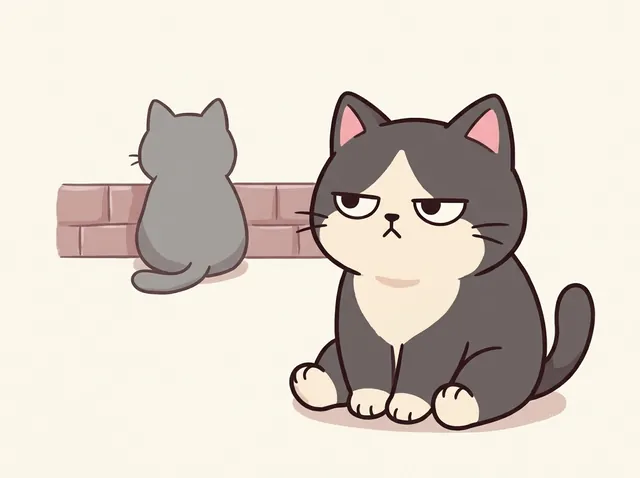
An avoidant breakup has a particular feel. They went quiet before it ended, or ended it with a short message, or simply stopped replying. Now they seem completely fine, maybe already busy with work, friends or someone new, while you're lying awake trying to understand what happened.
Research on avoidant attachment helps explain some of this, though not everything. This guide covers why avoidant exes often seem unaffected, why "no contact makes an avoidant come back" is a myth to handle carefully, and how to move on without waiting for them to change.
The short answer
People high in attachment avoidance tend to cope with breakups by pulling back and relying on themselves, and many of them do feel less distress, not just show less. That's about how they handle closeness, not about how much you were worth. No study shows that silence brings an avoidant ex back, and waiting for that keeps you stuck. Move on for your own sake: stop the contact and the checking, and stop trying to diagnose them.
What does "avoidant" actually mean?
The term comes from attachment theory, which researchers applied to adult romantic relationships starting with work by Hazan and Shaver in 1987 (reviewed by Fraley and Shaver, 2000). In research, attachment isn't a box you're put in. It's measured on two scales: anxiety, which is worry about being abandoned, and avoidance, which is discomfort with closeness and depending on others. Low scores on both are what researchers call secure.
Studies also separate two kinds of avoidance, which matters for a dismissive avoidant breakup in particular. Dismissing-avoidant people tend to value independence and play down their need for others. Fearful-avoidant people want closeness but also fear it, so they can pull away while still hurting. This difference matters after a breakup, as you'll see below.

Why does my avoidant ex seem fine?
Sometimes because they mostly are. Several studies point the same way.
- Less distress, more self-reliance. In a survey of more than 5,000 people about their breakups, attachment avoidance was weakly linked to less distress and less effort to get the partner back, and strongly linked to avoidant and self-reliant ways of coping. Anxiety showed the opposite pattern: more preoccupation, more distress and more attempts to reestablish the relationship (Davis, Shaver and Vernon, 2003).
- They can switch off the thoughts. In two experiments, dismissing-avoidant adults who were asked to suppress thoughts related to being abandoned had those thoughts come to mind less easily afterwards, and their physiological arousal dropped. The researchers concluded they weren't simply hiding distress; they were able to turn down the attachment system itself (Fraley and Shaver, 1997).
- But not all avoidants. In a study of 59 bereaved adults, dismissing-avoidant people tended to be resilient after the loss, while fearful-avoidant people had a hard time adapting (Fraley and Bonanno, 2004). That study was about death, not breakups, but it's a useful warning: "avoidant" can look calm on the outside in very different ways.
So your ex may genuinely be coping well, or may be hurting in private. You can't tell from their stories or their silence, and either way, it doesn't tell you anything about what the relationship meant.
Why do avoidants pull away or ghost?
Pulling back is the core avoidant strategy when closeness or conflict feels like too much. Some research links this to how relationships end. In three studies with more than 1,200 people in total, those who had ghosted a partner reported higher attachment avoidance than people with no ghosting experience, while those who had been ghosted reported higher attachment anxiety (Powell and colleagues, 2021). In another study, people who ended things by ghosting reported less distress than people who ended things with a direct conversation, and the people on the receiving end of a breakup reported more distress than the people who ended it (Koessler and colleagues, 2019).
That's a painful imbalance, and it fits what many people feel: the person who leaves quietly walks away lighter, and the person left carries the questions. If you were ghosted, it says more about how they handle hard conversations than about you.
The anxious-avoidant trap
Many avoidant breakups involve a partner who leans anxious. The pattern is familiar: one person reaches for reassurance, the other feels crowded and steps back, which makes the first reach harder. Research suggests these pairings are common and can last. In a 1994 study of 354 dating couples, Kirkpatrick and Davis found that partners' styles weren't randomly matched (there were no anxious-anxious or avoidant-avoidant pairs), and that relationships between avoidant men and anxious women were surprisingly stable over three years, even though both partners rated them poorly at the start.
Stable isn't the same as good. If this sounds like your relationship, it may help to see the breakup as the end of a loop, not the loss of the one person who could make you feel safe. Our guide to anxious attachment after a breakup covers the anxious side in more depth.
Does no contact make an avoidant come back?
There's no evidence that it does. The idea goes like this: an avoidant feels relief at first, then misses you once the pressure is gone, then returns. Some exes do reach out after a while, for all kinds of reasons. But no study has tested no contact as a way to bring anyone back, avoidant or not, and the research above suggests many avoidant people cope with distance quite well.
The bigger problem is what this belief does to you. No contact used as a tactic turns into waiting: checking whether they viewed your story, reading every silence as a sign. That keeps the attachment alive on your side. Use no contact for your own recovery, with no expectation about their response. If you're stuck on whether they feel anything, see does my ex miss me?
Should you try to work out if your ex is avoidant?
It's tempting, and it can be comforting to have an explanation. But be careful. Attachment styles are measured with questionnaires, on a range, by people answering about themselves. A list of internet signs can't diagnose someone, and the same behaviour (going quiet, needing space, ending things by text) can come from stress, depression, conflict avoidance, or simply not wanting the relationship any more. A label can also turn into a reason to keep studying them, which is another way of staying connected.
A more useful question is about you: what did you need that you didn't get, and what did you do when you didn't get it?
How to move on from an avoidant ex
- Accept the ending you got. You may never get the long talk. Say it to yourself in one sentence: "It's over, and I don't need their explanation to stop." Our guide to getting closure can help.
- Stop the contact and the checking. Mute or unfollow, and don't reply to the occasional "hey". Each small contact restarts the hope.
- Write down the pattern. When did they pull away? What happened just before? What did you do next? Seeing the loop on paper makes it easier not to repeat it.
- Write the message, don't send it. If you need to say "you never let me in", say it in writing that stays with you.
- Plan for your hardest hour. Make an if-then plan: "If I want to check their profile at night, I'll text a friend instead."
- Lean on people. In the large breakup survey above, secure people coped by turning to friends and family. That's a skill anyone can practise, starting with one call.
- Notice what felt like love. If chasing someone distant felt like passion, that's worth knowing before the next relationship.
When to get help
If you can't sleep, eat or work for weeks, if you keep going back to someone who keeps disappearing, or if you have thoughts of harming yourself, please talk to a doctor or a mental health professional, or contact a local helpline. A therapist can also help with attachment patterns if you notice the same loop in every relationship.
How OverYou helps
OverYou gives you a no contact streak with a daily check-in, so your progress doesn't depend on whether they ever reply. When you want to check on them or reach out, "I'm tempted" asks for a 30-second pause and then what you're hoping to find, and "Don't Send It" lets you write the message without it leaving your phone. Mochi, the app's AI coach, can talk it through with you. It's self-care, not therapy.
Sources
- Personality and Social Psychology Bulletin (2003). Physical, emotional, and behavioral reactions to breaking up: the roles of gender, age, emotional involvement, and attachment style
- Journal of Personality and Social Psychology (1997). Adult attachment and the suppression of unwanted thoughts
- Personality and Social Psychology Bulletin (2004). Attachment and loss: a test of three competing models on the association between attachment-related avoidance and adaptation to bereavement
- Journal of Social and Personal Relationships (2021). A multi-study examination of attachment and implicit theories of relationships in ghosting experiences
- Collabra: Psychology (2019). When your boo becomes a ghost: the association between breakup strategy and breakup role in experiences of relationship dissolution
- Journal of Personality and Social Psychology (1994). Attachment style, gender, and relationship stability: a longitudinal analysis
Frequently asked questions
Why does my avoidant ex seem fine?
Often because they cope by pulling back and relying on themselves. In a survey of more than 5,000 people, attachment avoidance went with slightly less breakup distress and more self-reliant coping, though some avoidant people do hurt in private.
Does no contact work on an avoidant?
There's no evidence that no contact makes an avoidant ex come back. Use it for your own recovery, with no expectation about how they respond.
Do dismissive avoidants regret a breakup?
Some may, but research suggests dismissive avoidant people are often good at switching off thoughts about loss. You can't predict it, so it's safer to move on without waiting to find out.
OverYou is an app for keeping no contact: a streak, a 30-day program, a 30-second pause for when the urge hits, and a place to write the text instead of sending it. Get it on the App Store or Google Play, or see how it works.