Writing an Unsent Letter to Your Ex: How and Why It Helps
There's a message you keep writing in your head. Maybe it's an apology, maybe it's everything you never got to say, maybe it's one angry sentence. Sending it feels impossible and not sending it feels unbearable.
There is a third option, and it's one therapists have suggested for a long time: write it all down, properly, and don't send it. An unsent letter gives the words somewhere to go without reopening contact.
Why writing it helps
It empties the loop. Thoughts you're trying not to have tend to circle. Once they're written in full sentences, your mind often stops replaying them, because they've been "said".
It shows you what you actually feel. You might sit down to write "I miss you" and find yourself writing about how lonely you felt in the last year together. That's useful information.
It gives you the last word. Many breakups end without a conversation that feels finished. A letter lets you finish it on your side, even if they never read it.
It replaces the urge to text. When the urge to reach out hits, writing is something you can do right away, and it satisfies part of the same need.
How to write it
There's no right format, but these steps help most people get past the first awkward line.
1. Pick a place they can never see
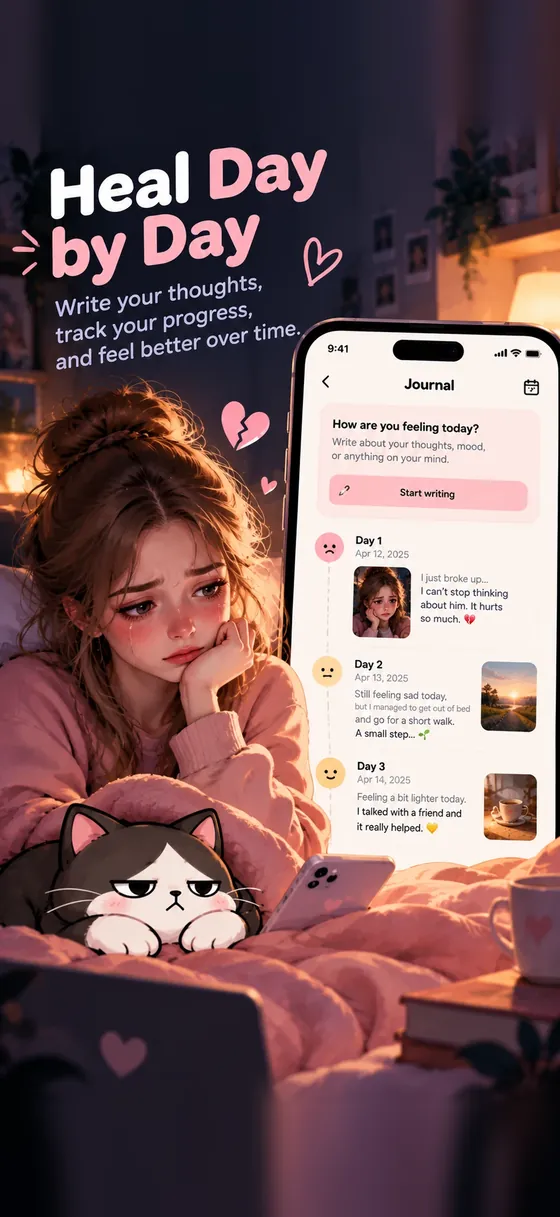
A notebook, a notes app with their name nowhere near it, or an app built for it. Not your messaging app, and not a draft email addressed to them. One slip of the thumb is all it takes.
2. Start with "Dear [their name]"
Writing to them directly, rather than about them, tends to bring up the real feelings faster.
3. Write without editing
Set a timer for 15 minutes and keep going. Spelling, fairness and sounding reasonable don't matter here. If you're angry, be angry. If you're sorry, say so. Nobody is grading this.
4. Cover the things you never said
If you get stuck, try finishing these sentences:
- "What I miss most is..."
- "What hurt me most was..."
- "I'm sorry that I..."
- "I wish you had..."
- "What I need to let go of is..."
- "What I want for myself now is..."
5. End with a goodbye
Even if you don't feel ready, try writing a closing line: "I'm letting this go", "I hope you're okay, and I'm going to be okay too", or simply "Goodbye". You don't need to believe it fully yet. Writing it is a rehearsal.
What to do with the letter afterwards
- Keep it and reread it in a month. Many people are surprised by how far they've come.
- Destroy it. Tearing up or deleting the letter can feel like a small, physical ending.
- Write another. One letter rarely says everything. Some people write one a week for the first month.
The one thing not to do is send it. A letter written for yourself says things in a way that would land very differently in their inbox, and their reply, or silence, would become the new thing you can't stop thinking about. If you're torn, read should I text my ex? first.
Short version: the unsent text
Not every urge needs a full letter. When you catch yourself typing a message to your ex, copy it into your notes instead and close the chat. Wait until tomorrow. Most of those messages look very different in the morning, and almost none of them still feel urgent.
Write everything you need to say. Send nothing. Read it again next month.
Frequently asked questions
What is an unsent letter to an ex?
A letter you write to your ex, saying everything you need to say, with no intention of sending it. It gives your thoughts somewhere to go without restarting contact.
Does writing a letter to your ex help you move on?
For many people, yes. Writing in full sentences helps stop thoughts from looping, shows you what you really feel and gives you a sense of having had the last word.
What should I write in an unsent letter?
Start with "Dear [their name]" and write freely for 15 minutes. If you get stuck, finish sentences like "What I miss most is", "What hurt me most was" and "What I want for myself now is", then end with a goodbye.
OverYou is a free iPhone app for keeping no contact: a streak, a 60-second timer for when the urge hits, and a place to write the text instead of sending it. See how it works.